
Think of a long-sleeve shirt covering part of your hand. Your hand didn't get smaller — it just looks smaller because the sleeve is covering it. Your tooth is the hand. Your gum is the sleeve. Sometimes you just need less sleeve.
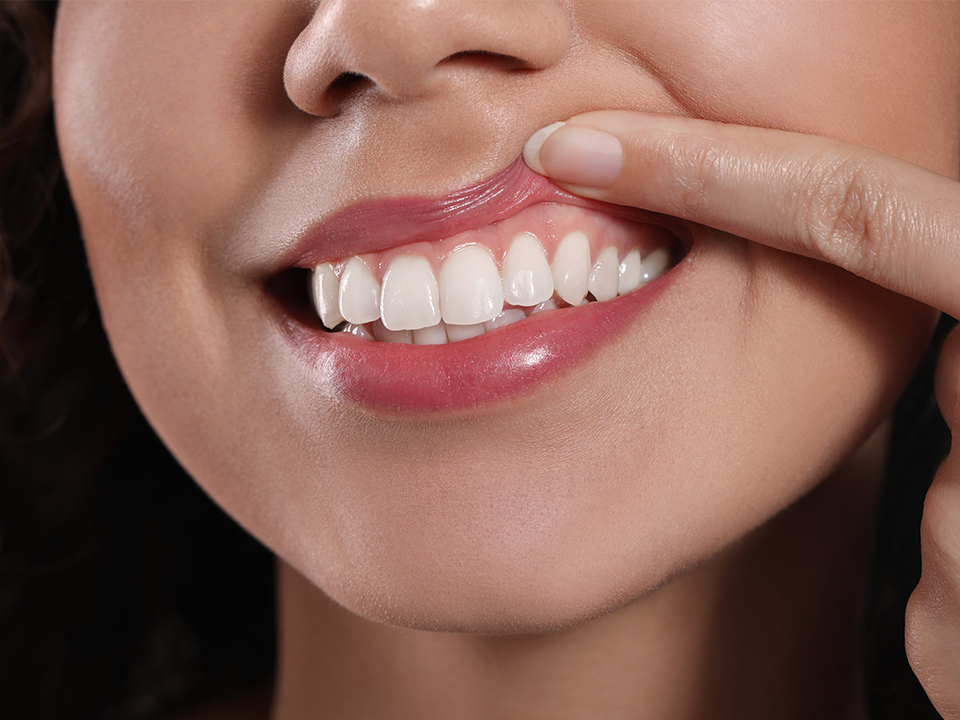
Nothing was added to the tooth. The tooth was already there.
That is what a gummy smile often is — excess or uneven gum tissue covering part of the natural teeth. Gum recontouring reveals more of what was already yours. The result is often a longer-looking, more balanced smile.
Results
See what was hiding.
Look at the gumline, not the teeth — the teeth themselves are unchanged.
Before
Healed
Same teeth. Less gum. Big difference.
The procedure
Small procedure. Big reveal.
Also called gum contouring, gum reshaping, a gum lift, or an aesthetic gingivectomy — all the same thing.
What happens
We carefully remove and reshape excess gum tissue. It is one of the most common ways to treat a gummy smile. We numb the area with a little local anesthetic, then reshape the gumline using a laser, a surgical blade, or a combination of techniques depending on the case.
Sometimes the improvement is visible immediately. Other times the gums need a few days to settle and heal. Either way, patients are often surprised by how much difference revealing just a millimeter or two can make.
- Short-looking teeth appear longer
- Square teeth take on better proportions
- Uneven gumlines even out
- The whole smile reads more balanced
Recovery
What to expect
Most gum recontouring appointments are finished within an hour.
Easier than people expect walking in
We numb the area first, so the procedure itself is comfortable. Afterward, most patients are fine with Tylenol or Advil — this tends to be an easier recovery than people expect. How we handle discomfort →
The gums usually settle within a few days, especially with good oral hygiene. Keeping the area clean makes a real difference in how quickly things heal.
Aftercare is simple: good oral hygiene, plus a warm salt water rinse — about a teaspoon in a cup of warm water — after every meal for the first three days.
See treatment-day photos
Freshly treated gum tissue can look dark and uneven before it settles — these photos show that healing stage, not the final result. We'd rather show you the whole process than have you wonder what's normal.
During treatment
Immediately after
Fair warning: it feels a lot better than it looks. Most patients are surprised by how little the recovery bothers them.
The dark area is surface staining from one of the materials we use to control bleeding. The other side was treated with a different one that doesn't stain. It's surface-level only, it fades as the gums heal, and both sides end up the same.
Sequence
Before you jump to veneers…
Even if veneers may eventually be part of your plan, getting the gumline right first can help create better proportions and a better final result. And if you're not sure you want veneers, this can be a great place to start.
Reveal first. Whiten. Refine if needed. Then decide.
You may find that you need much less dentistry than you originally thought. Learn more about SmileReveal, professional teeth whitening, and no-prep veneers.
Important
One important catch
Not every gummy smile should simply have the gums trimmed
The teeth, underlying bone, and even the way the upper lip moves can affect how much gum shows. A lip that travels further than average when you smile produces a gummy appearance that no amount of tissue removal will correct — and taking tissue anyway makes things worse, not better.
That's why we evaluate first and contour second. The goal isn't to remove more gum. It's to reveal exactly the right amount of tooth.
Pricing
Real numbers, before you call.
These are estimates. Your exact figure is confirmed at your consult, in writing, before anything begins.
Gum lift (gingivectomy)
Per tooth. Free with 4 or more porcelain veneers done at once.
$100Per tooth
Tooth recontour (enamelplasty)
Softening sharp corners and evening lengths. Often done alongside a gum lift.
$100Per tooth
SmileReveal package
Bleaching, gum lift and enamel recontouring across the front 6 to 10 upper teeth, priced together rather than tooth by tooth.
$1,500–2,000Package
Dental insurance does not pay for aesthetic treatment. We'd rather you hear that from us now than find out later.
Questions
Before you book
Will my gums grow back?
For most patients, no. The new gumline settles a little during healing and then stays where it was reshaped.
Some patients do see gradual regrowth. Sometimes that's because the bone underneath — not just the gum tissue — was setting the position, which is why we evaluate before we contour rather than after.
And sometimes it's simply how a particular person heals. We occasionally see patients whose tissue regenerates more impressively than anyone can predict from an exam. There's no test for it. Bodies aren't identical, and we'd rather tell you that up front than pretend otherwise.
The good news: in most cases it can be redone. Usually there's less to remove the second time, but it's the same procedure.
What causes a gummy smile?
Most often, excess or uneven gum tissue covering part of the natural teeth. But tooth position, the underlying bone level, and how far your upper lip travels when you smile all contribute. Which one is driving yours determines whether recontouring is the right answer — and that is the point of evaluating first.
Does it hurt?
The area is numbed with local anesthetic, so the procedure itself is comfortable. Most patients manage afterward with Tylenol or Advil and describe the recovery as easier than they expected.
How long does it take?
Most appointments are finished within an hour. Sometimes the improvement is visible immediately; other times the gums need a few days to settle.
Laser or blade — which do you use?
Whichever suits the case, and often a combination. Neither is universally better. The technique follows the tissue and the result we are after, not a preference for one instrument.
Is it covered by insurance?
Not when it is done for appearance. Dental insurance does not pay for aesthetic treatment. Gum surgery done to treat gum disease is a different matter and is often covered — we will tell you plainly which category yours falls into.
Where exactly are you?
2072 E Southern Ave A103, Tempe, AZ 85282. Two other dental offices share this building — Suites A101 and A102 — so look specifically for A103.
For general information beyond what's here: MouthHealthy.org (American Dental Association), and the Arizona State Board of Dental Examiners, where you can verify any dentist's license.
Book
Want to see what your smile is hiding?
We evaluate first and contour second — so you find out what is possible before anything is done.
© 2026 Live To Smile. All rights Reserved - Accessibility Statement - Privacy Policy - Sitemap
Managed and Designed by 