
To be clear
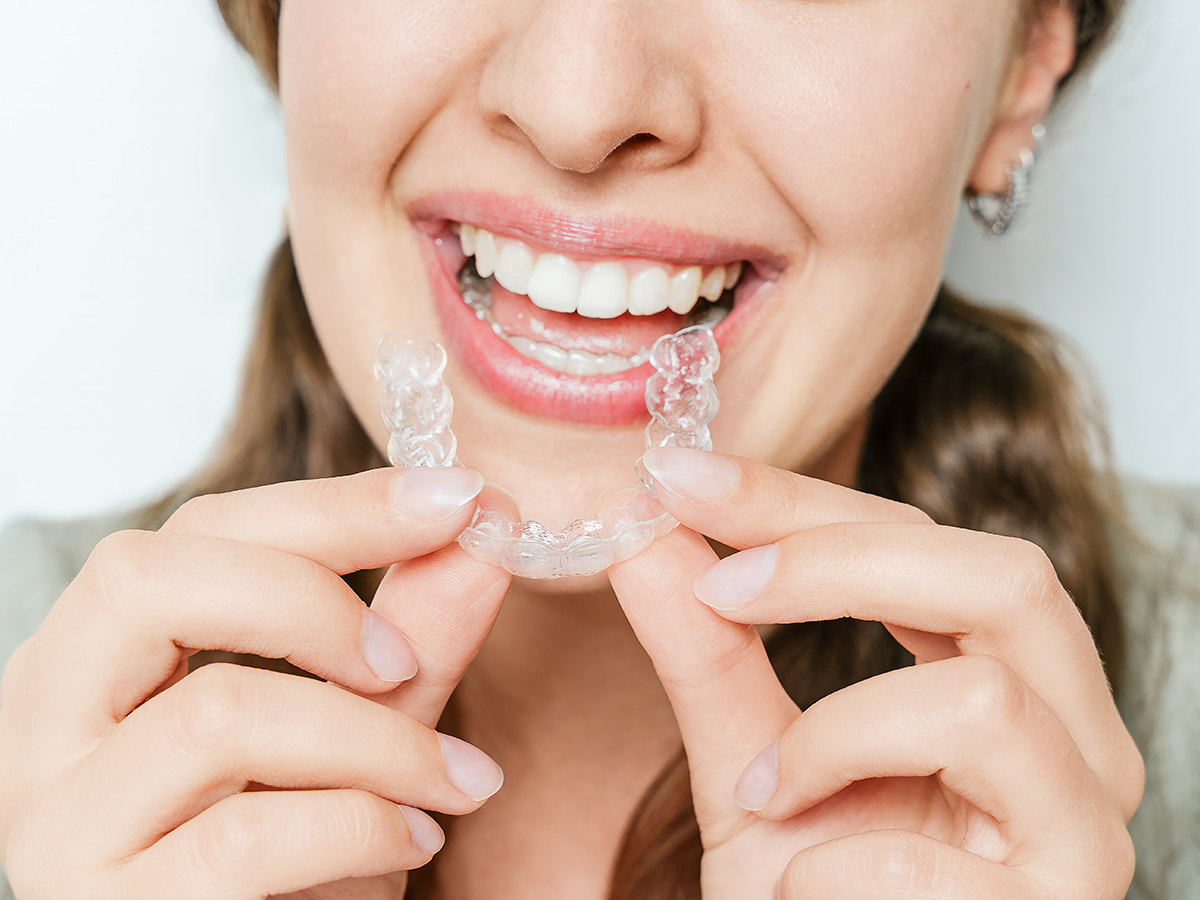
The hardest part of aligners was never the aligners. It was wearing them.
Twenty-two hours a day is easy to agree to in the chair and easy to let slide by week nine. Seeing your own teeth actually move, on your own phone, turns out to be the thing that keeps people honest.
AI monitoring
What it actually changes
The aligners are the same technology they have been. What has changed is what happens in the weeks between appointments.
You scan, the system checks, we only see you when it matters
On a set schedule you take a short scan of your teeth with your phone. The system compares what it sees against where your treatment plan says your teeth should be at that point, and flags anything off-track.
If everything is tracking, you carry on to the next aligner without driving here for a two-minute look. If something is not seating properly or a tooth is lagging, we know within days instead of at your next appointment six weeks later — which is often the difference between a small adjustment and a set of refinement trays.
Fewer office visits
Most routine progress checks move from the chair to your phone. Your time is worth something, and a lot of orthodontic appointments have historically been a look and a nod.
Problems caught earlier
Weekly-ish scanning means an off-track tooth surfaces in days, not at the next appointment. Small corrections beat large ones.
You stay in it
This is the underrated one. Watching your own teeth move week to week makes wear time feel like it is doing something — and compliance is the single biggest determinant of whether aligner treatment finishes on time.
Part of the process
You are not handing your mouth over and waiting to be told how it went. You can see the movement yourself, which changes the relationship to the treatment entirely.
How it goes
Start to finish
01
Scan and plan
A digital scan of your teeth becomes a treatment plan showing where each tooth ends up and roughly how long it takes. You see the projected result before you commit to anything.
02
Wear and scan
Aligners changed on schedule, worn as close to twenty-two hours a day as you can manage. You scan from home on the monitoring schedule and we watch the progress remotely.
03
Finish and retain
When the teeth are where they should be, you move into retainers. This part is not optional — teeth drift back, and retention is what protects everything you just paid for.
Candidacy
Is this you?
Usually a good fit
- Mild to moderate crowding
- Spacing and gaps
- Teeth that have drifted since childhood braces
- Mild bite issues
- Adults who do not want visible brackets
- You will actually wear them 22 hours a day
Needs a closer look first
- Significant bite or jaw discrepancies
- Severe crowding or rotation
- Active gum disease
- Teeth needing extraction as part of the plan
- Cases better served by traditional braces or a specialist
If your case belongs with an orthodontist, we will tell you that and refer you. That is a shorter list than most offices admit, but it is not empty.
Before veneers
Sometimes moving teeth means less dentistry, not more
Straightening first can shrink the cosmetic case
A tooth sitting forward is the classic reason a no-prep veneer would look bulky, and the classic reason a case turns into minimal-prep instead. Move that tooth back into line first and the veneer that goes on it can be thinner, more conservative, and sometimes unnecessary.
Occasionally the honest answer after alignment is that you do not need veneers at all — just whitening, or a gum lift, or nothing. We would rather get there than sell you ten veneers to disguise a positioning problem that could have been fixed.
See the veneer options → · Or SmileReveal, with no veneers at all →
Questions
Before you book
How long does treatment take?
It depends entirely on how far the teeth have to move — some cases finish in months, others run over a year. You will get a realistic estimate from the treatment plan before you start, not a marketing number.
Do I still need to come in at all?
Yes, just less often. Remote monitoring handles the routine progress checks; there are still points in treatment where being seen in person is the right call, and we will schedule those.
Is the AI making treatment decisions?
No. It monitors and flags — it compares your scan to the plan and tells us when something looks off. The clinical decisions are made here. It is a monitoring tool, not a substitute for a dentist.
What if I lose an aligner?
Call us. Usually you go back to the previous tray or forward to the next depending on where you are in the cycle, and we sort out a replacement. Do not just leave them all out and wait — teeth move back faster than they moved forward.
Will insurance cover it?
Many plans have a separate orthodontic benefit, often with a lifetime maximum rather than an annual one, and it sometimes applies to adults as well as children. We check yours specifically before you commit.
Where exactly are you?
2072 E Southern Ave A103, Tempe, AZ 85282. Two other dental offices share this building — Suites A101 and A102 — so look specifically for A103.
For general information beyond what's here: MouthHealthy.org (American Dental Association), and the Arizona State Board of Dental Examiners, where you can verify any dentist's license.
Book
See where your teeth would end up.
The plan shows you the projected result before you commit to any of it.
© 2026 Live To Smile. All rights Reserved - Accessibility Statement - Privacy Policy - Sitemap
Managed and Designed by 